
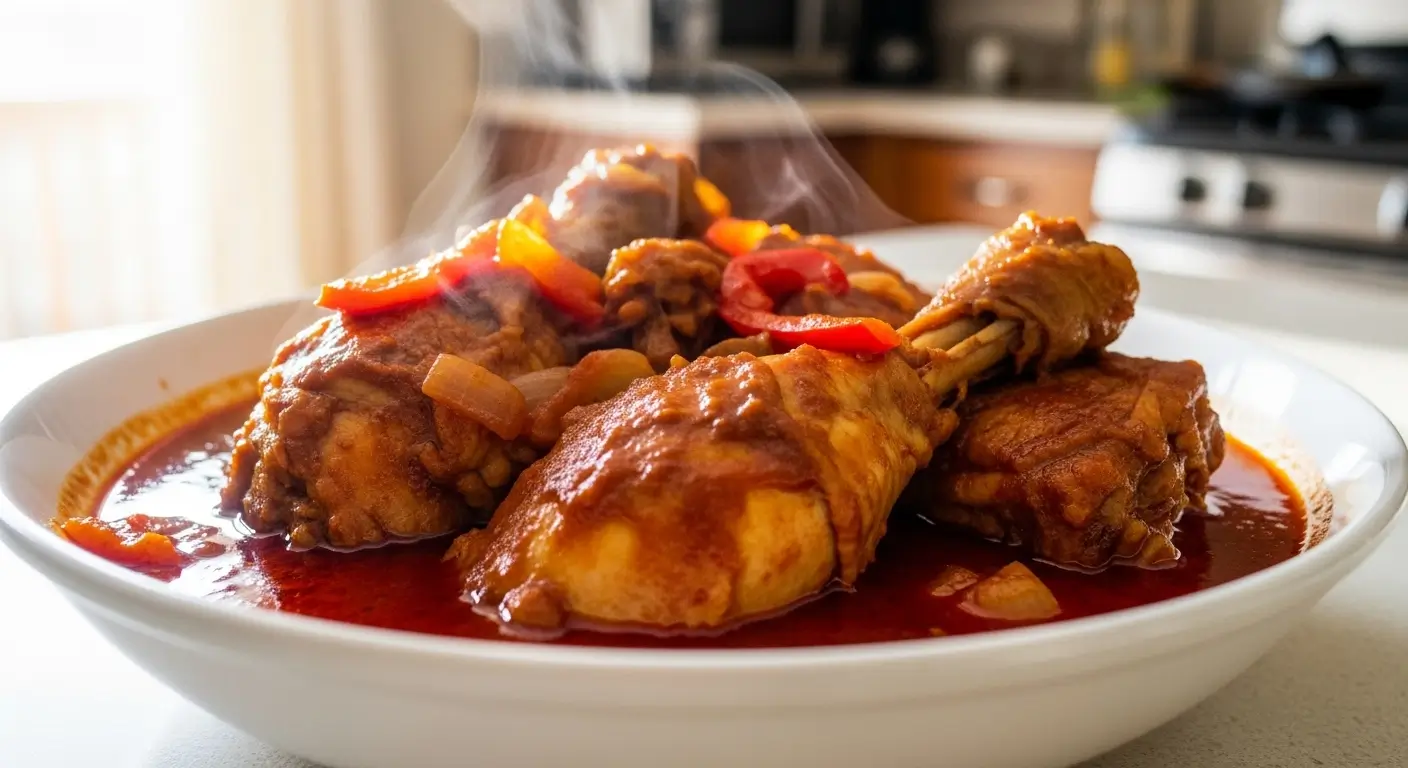
Okay, so here’s the thing about Nigerian chicken stew. I’ve been making this for maybe two years now? Ever since my coworker Amara brought some to our office potluck and I literally couldn’t stop eating it. Like, embarrassingly couldn’t stop. I asked her for the recipe that day, and she laughed and said “Good luck writing this down because I don’t measure anything.”
She wasn’t kidding.
But after making this chicken stew approximately a million times (okay, more like 30, but who’s counting?), I finally figured out the measurements that work. And let me tell you, this is nothing like the boring chicken stew recipes you find everywhere else. This is rich, smoky, slightly spicy, and has this incredible depth of flavor that makes you want to eat it straight from the pot with a spoon.
Table of Contents :
What Makes Nigerian Chicken Stew Different :
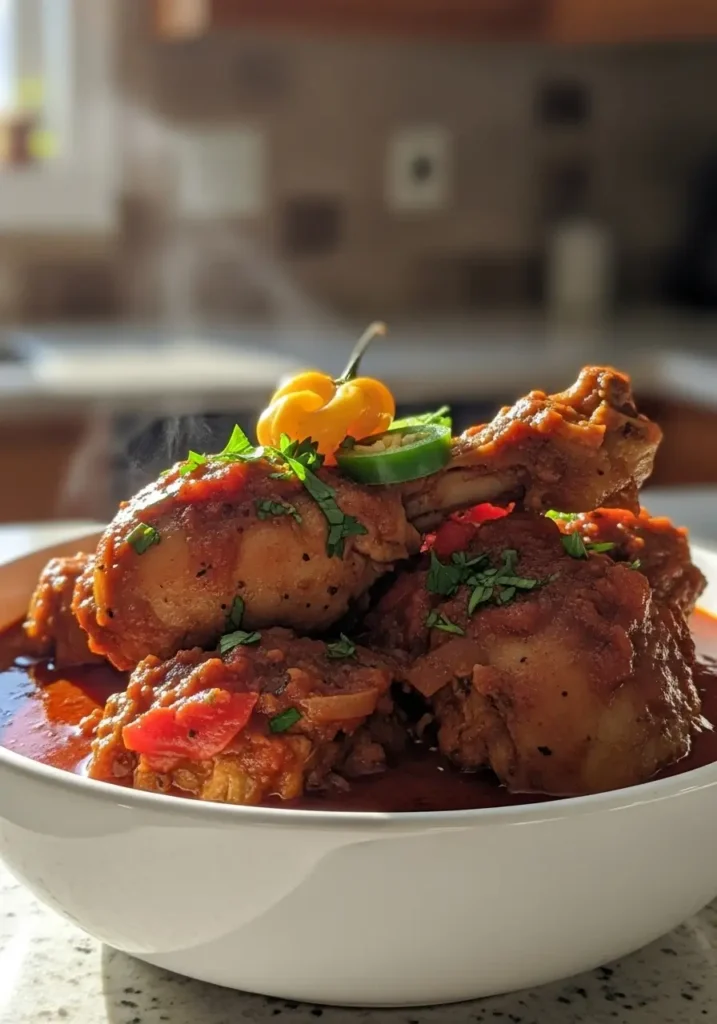
Look, I’m gonna be honest with you. The first time I tried making this, I thought “it’s just chicken in tomato sauce, right?” WRONG. So wrong. The secret is in the peppers and the way you cook down the tomatoes until they’re thick and almost jammy. It takes time. Like, actual time. Not the “simmer for 10 minutes” nonsense.
Traditional chicken stew from West Africa gets its signature red color and complex flavor from blending fresh tomatoes with red bell peppers and scotch bonnet peppers. Then—and this is crucial—you fry that mixture in oil until it loses its raw taste. Amara calls this “frying out the water” and honestly, that’s the best description.
I’ve tried shortcuts. Used canned tomatoes once when I was lazy. It was… fine? But not the same. The fresh tomatoes make such a difference, even though they’re more work.
Ingredients You’ll Need :
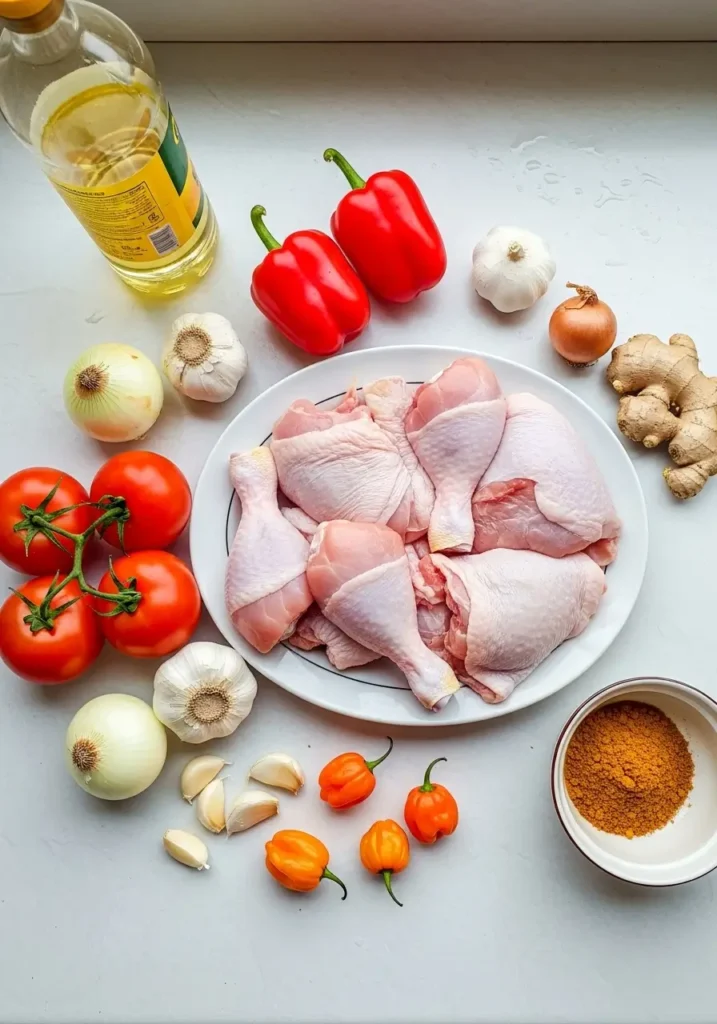
For the chicken:
- 2 lbs chicken pieces (thighs and drumsticks work best, trust me on this one)
- 1 medium onion, roughly chopped
- 2 teaspoons curry powder
- 1 teaspoon thyme
- 2 bouillon cubes (I use Maggi because that’s what Amara uses)
- Salt and pepper
- 3 cups water
For the stew base:
- 6 large tomatoes (or about 2 lbs—look for the ripest ones you can find)
- 3 red bell peppers
- 2 scotch bonnet peppers (or 1 habanero if you can’t find scotch bonnets. Or skip entirely if you’re scared of heat. No judgment)
- 1 large onion
- 6 cloves garlic (or 8, because garlic makes everything better)
- 2-inch piece of ginger
- 1 cup vegetable oil (I know it seems like a lot, but just… trust the process)
- 3 tablespoons tomato paste
- 2 bay leaves
- Salt to taste
Side note: Finding scotch bonnet peppers in my area is basically impossible, so I usually end up using habanero from the grocery store. My neighbor grows them in summer and always gives me extras, which is amazing because store-bought peppers are weirdly expensive?
How to Make Nigerian Chicken Stew :
Step 1: Season and Cook the Chicken
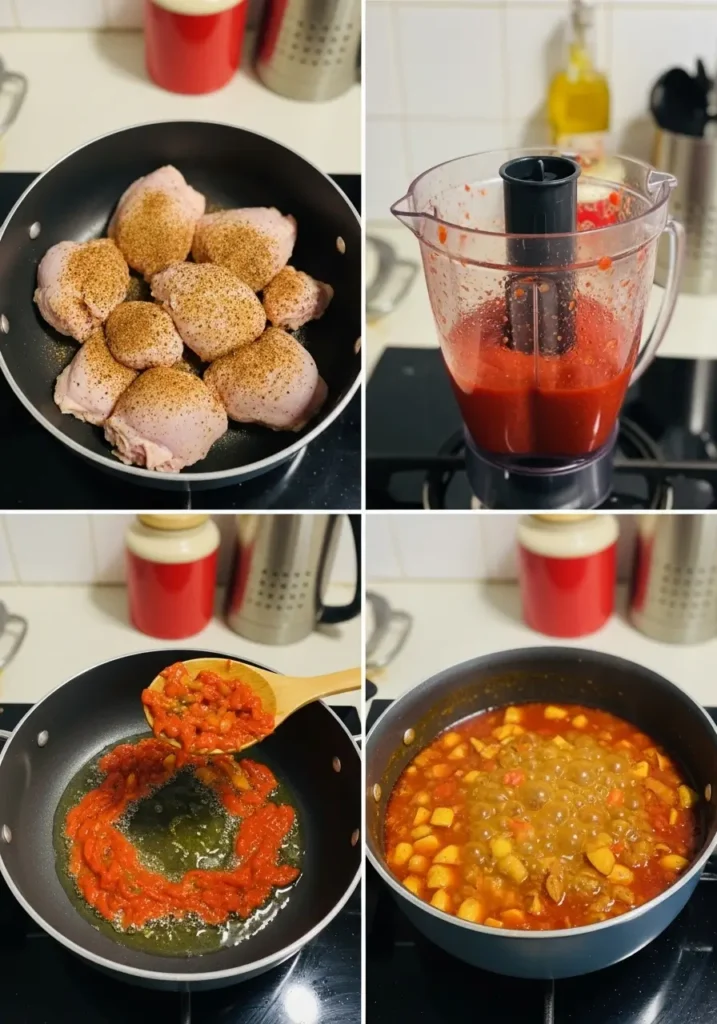
Start by seasoning your chicken pieces with curry powder, thyme, bouillon cubes, salt, pepper, and half of the chopped onion. I usually do this in the morning and let it sit in the fridge all day because I think it tastes better? But 30 minutes works too if you’re in a hurry.
Put the seasoned chicken in a pot with 3 cups of water and bring it to a boil. Then reduce heat and let it simmer for about 20-25 minutes until the chicken is cooked through. Save that broth! Don’t pour it down the sink like I did the first time. We’re using it later and it makes the chicken stew so much richer.
Step 2: Blend the Pepper Mixture
While the chicken is cooking—oh wait, I forgot to mention—you should probably prep your vegetables first. Anyway.
Roughly chop your tomatoes, red bell peppers, scotch bonnets, onion, garlic, and ginger. Throw everything into a blender and blend until smooth. It’ll be bright red and honestly looks kind of alarming. That’s normal.
Important: Don’t blend it into baby food consistency. Leave it slightly chunky. I learned this when I over-blended once and the texture was just… wrong.
Step 3: Fry the Pepper Mixture (The Most Important Step)
Okay. Deep breath. This is where most people mess up chicken stew.
Heat your oil in a large pot—I use my dutch oven because it’s deep and nothing splashes on my stove. Pour in your blended pepper mixture and stir. It’s going to bubble. A lot. Like, volcanic bubbling. Keep the heat on medium-high and keep stirring.
This part takes 30-45 minutes. Maybe longer. You’ll know it’s done when:
- The mixture has darkened from bright red to deep red
- The oil starts separating and floating on top
- It’s reduced by almost half
- Your kitchen smells AMAZING
I usually set a timer for 10-minute intervals to remind myself to stir because I’ve definitely walked away and burned the bottom before. Learned that lesson the hard way when I got distracted by a phone call and came back to smoke everywhere. Not my finest moment.
Step 4: Add Tomato Paste and Seasonings
Stir in the tomato paste and cook for another 5 minutes. Add your bay leaves and season with salt. Taste it. Add more salt if needed. I always need more salt than I think I do.
Step 5: Add the Chicken and Broth
Now add your cooked chicken pieces and about 2 cups of that reserved chicken broth. You want the stew to be thick but not dry. If it looks too thick, add more broth. If it’s too thin, let it cook longer.
Reduce heat to low, cover the pot, and let everything simmer together for 15-20 minutes so the chicken can soak up all those flavors.
Serving This Chicken Stew :
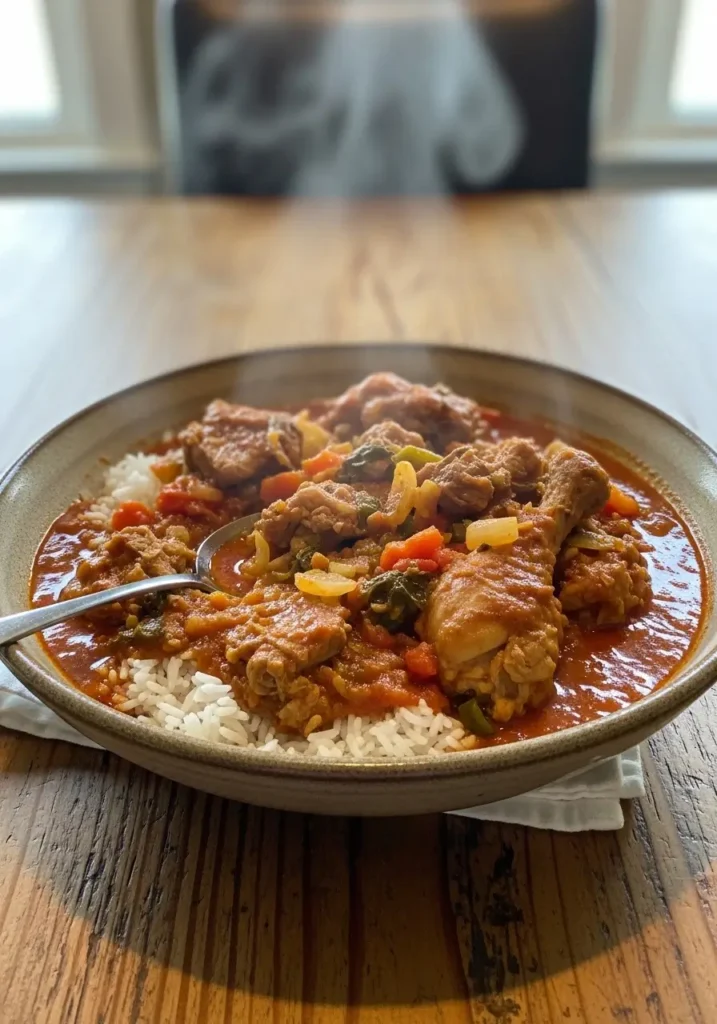
Nigerian chicken stew is traditionally served over white rice. I’ve also eaten it with jollof rice (which Amara made for me once and I’m still dreaming about), fried plantains, or even just crusty bread for scooping.
My kids—who normally complain about everything—actually ask for this. Well, the 8-year-old does after I remove all visible pepper pieces. The teenager acts too cool to care but I’ve seen him go back for thirds, so.
Tips I Wish Someone Had Told Me :
Use chicken thighs and drumsticks instead of breast meat. Breast meat gets dry and we’re cooking this for a while. Dark meat stays juicy and flavorful.
The oil amount freaks people out but you need it. The oil carries the flavors and gives the stew its signature richness. You can skim some off at the end if you’re worried, but don’t reduce the amount while cooking.
Scotch bonnet peppers add flavor, not just heat. Even if you’re sensitive to spice, try using one with the seeds removed. The flavor is worth it. Or just use bell peppers only and call it a day. Your kitchen, your rules.
This freezes incredibly well. I usually make a huge batch and freeze half for those nights when I absolutely cannot deal with cooking. Future you will be grateful.
The longer it sits, the better it tastes. Make it the night before if you can. The flavors deepen overnight in a way that’s kind of magical.
Common Mistakes with Chicken Stew :
Not cooking the pepper mixture long enough. I cannot stress this enough. If you rush this step, your stew will taste raw and bitter. Give it time.
Using pre-cooked chicken. I tried this once with a rotisserie chicken to save time and it just… didn’t work. The chicken needs to cook in the stew to absorb the flavors properly.
Skipping the bouillon cubes. I know people are weird about MSG and whatever, but bouillon cubes add a depth of flavor that salt alone can’t match. If you must skip them, at least use chicken stock instead of water.
Honestly, the worst version I made was when I tried to “healthy it up” by using only 1/4 cup of oil and adding water instead. It was so bland. Just make the real thing and eat smaller portions if you’re worried about calories.
Anyway, that’s my take on Nigerian chicken stew. It’s become one of those recipes I make at least twice a month because it’s just that good. My whole family requests it, even my mother-in-law who’s notoriously picky about “ethnic food” (her words, not mine).
Give it a try and let me know how it turns out! And if you have tips for making it even better, seriously drop them in the comments because I’m always looking to improve. 🙂
Nigerian Chicken Stew – Authentic West African Dinner Recipe
Authentic Nigerian chicken stew recipe with rich tomato-pepper sauce, tender chicken, and aromatic West African spices. This traditional chicken stew is perfect served over rice for a flavorful family dinner.
Ingredients
- 2 lbs chicken pieces (thighs and drumsticks)
- 1 medium onion, roughly chopped
- 2 teaspoons curry powder
- 1 teaspoon thyme
- 2 bouillon cubes
- Salt and pepper to taste
- 3 cups water
- 6 large tomatoes (about 2 lbs)
- 3 red bell peppers
- 2 scotch bonnet peppers (or 1 habanero)
- 1 large onion
- 6 cloves garlic
- 2-inch piece of ginger
- 1 cup vegetable oil
- 3 tablespoons tomato paste
- 2 bay leaves
Instructions
- Step 1Season chicken pieces with curry powder, thyme, bouillon cubes, salt, pepper, and half of the chopped onion. Let marinate for at least 30 minutes or up to several hours in the refrigerator.
- Step 2Place seasoned chicken in a pot with 3 cups of water. Bring to a boil, then reduce heat and simmer for 20-25 minutes until chicken is cooked through. Reserve the chicken broth for later use.
- Step 3Roughly chop tomatoes, red bell peppers, scotch bonnet peppers, onion, garlic, and ginger. Add all ingredients to a blender and blend until smooth but slightly chunky.
- Step 4Heat 1 cup of vegetable oil in a large pot or dutch oven over medium-high heat. Pour in the blended pepper mixture and cook for 30-45 minutes, stirring frequently, until the mixture darkens to deep red, reduces by half, and oil begins to separate on top.
- Step 5Stir in tomato paste and cook for 5 more minutes. Add bay leaves and season with salt to taste.
- Step 6Add cooked chicken pieces and 2 cups of reserved chicken broth to the stew. Adjust consistency by adding more broth if too thick.
- Step 7Reduce heat to low, cover the pot, and simmer for 15-20 minutes to allow flavors to meld and chicken to absorb the sauce.
- Step 8Serve hot over white rice, jollof rice, or with fried plantains and crusty bread.