
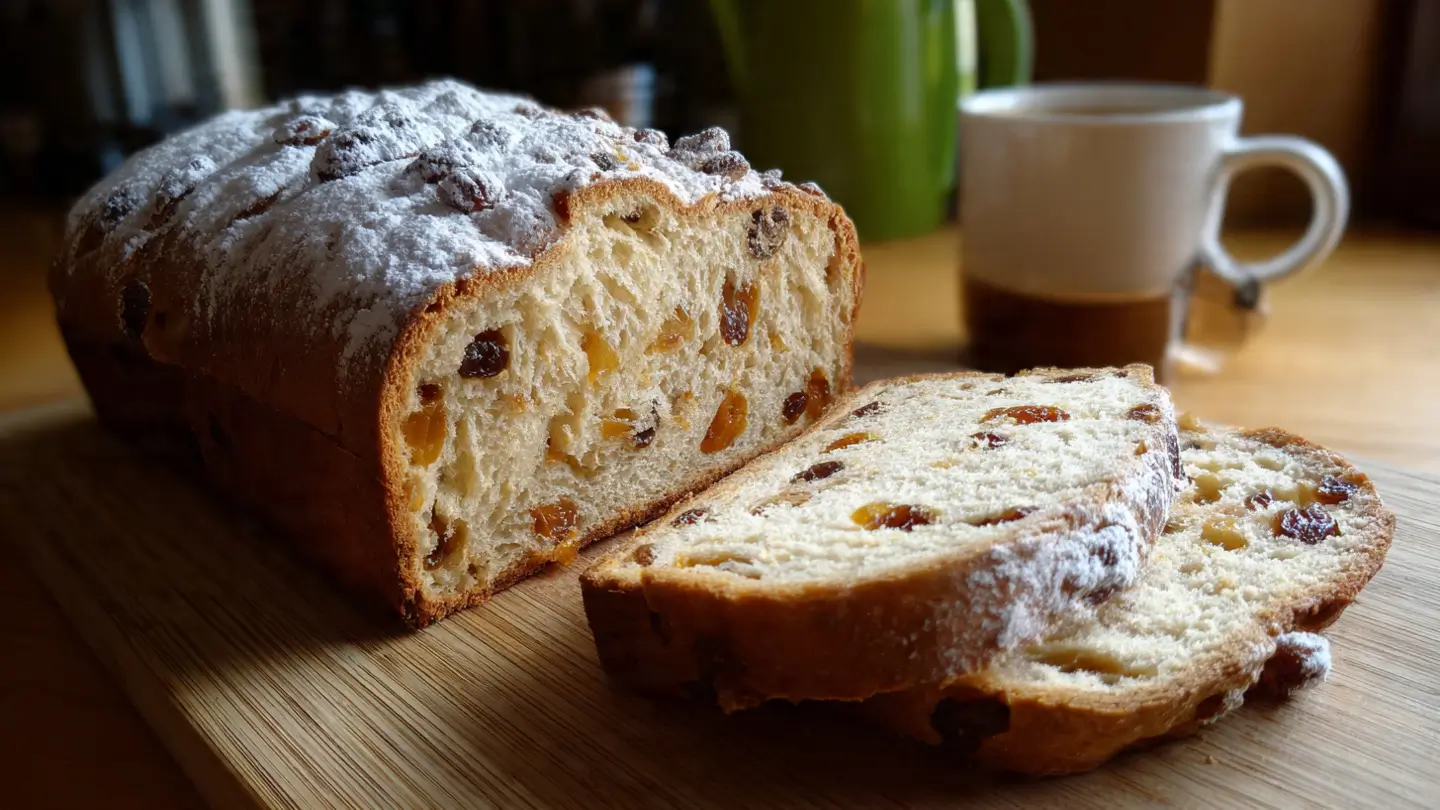
Okay, so I messed this up three times before getting it right. And honestly, I almost gave up on this Christmas Bread because version 1.0 was basically a sad, dry brick that could’ve been used as a doorstop.
But when you finally nail a soft, slightly sweet loaf packed with chewy dried fruit and that cozy holiday smell? Totally worth all the drama.
Christmas Bread. Let’s talk about it.
Everyone keeps asking for this recipe, so here goes nothing: this is my go-to Traditional Christmas Bread with Dried Fruit, the one that makes the whole house smell like December and cinnamon and “oh wow, did you bake that?”. It’s soft, lightly sweet (not cake-sweet), and it’s the kind of bread you want to eat warm with butter while the coffee is still steaming.
Now, here’s the thing. I think I first tried something like this at my grandma’s house, but then I’m pretty sure I tried a Pinterest version during lockdown when everyone was making banana bread and I wanted to be “different.” Somewhere between grandma’s memory and some random blog I can’t find anymore, this version was born.
Is it authentic to one country? I don’t know. It feels a bit like a mash-up between Italian panettone, Scandinavian holiday bread, and whatever my mom used to throw together when she found a bag of raisins in the pantry.
All I know is: it works.
And my 8‑year‑old, who refuses to eat anything with visible fruit 99% of the time, eats this happily. Go figure.
Table of Contents :
What Makes This Christmas Bread Special :
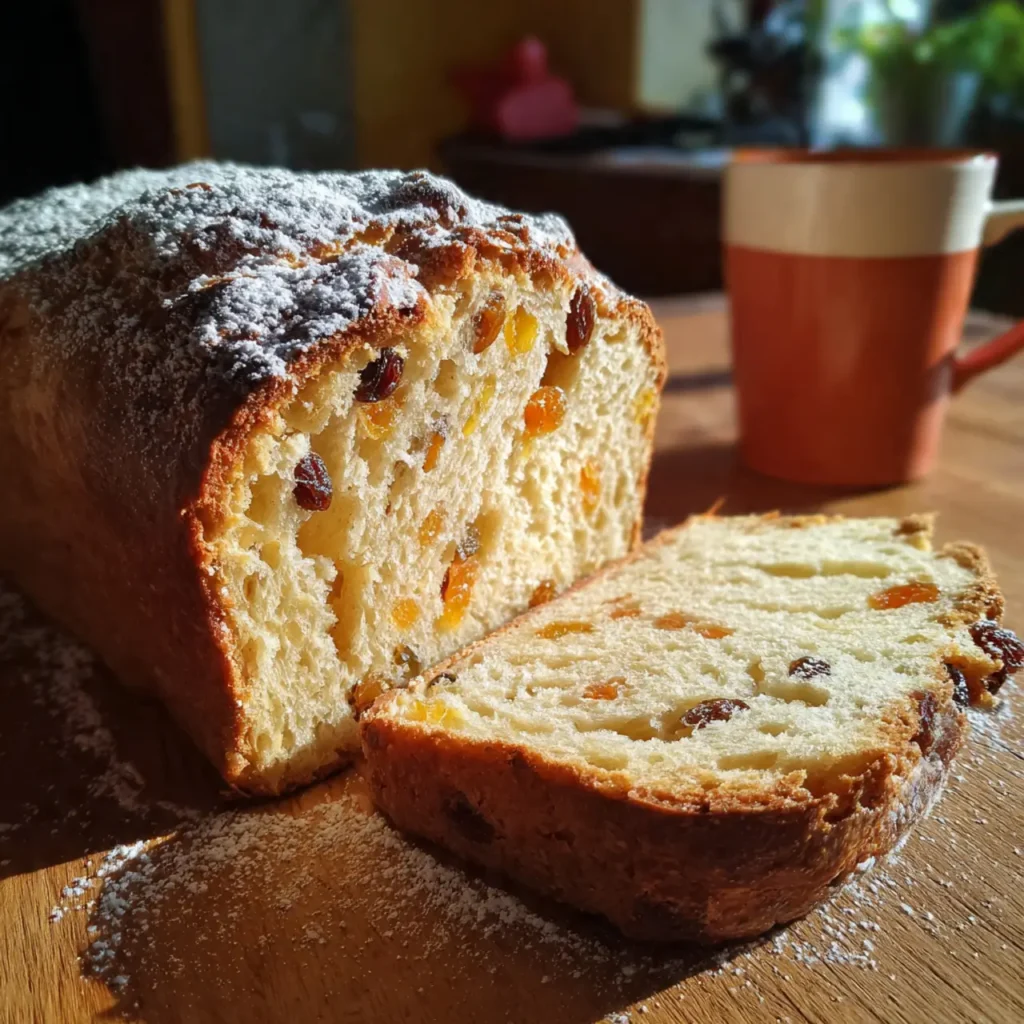
So, um, basically what happens is you get this tender, buttery dough that’s not too sweet, and then you load it up with:
- Soft raisins and chopped dried apricots
- A little orange zest
- Warm spices
- Optional nuts if you’re into crunch
It’s not one of those “look pretty but tastes like cardboard” breads. It’s actually good. Like eat-three-slices-then-pretend-you-didn’t good.
The first time I tried it, I forgot to soak the dried fruit. Disaster. Complete disaster. The fruit sucked every bit of moisture out of the dough and the loaf came out dry and weirdly rubbery. Learned that the hard way.
Now I always soak the fruit. Sometimes in orange juice. Sometimes in a splash of rum if no kids are around. Both work, and both smell amazing.
Ingredients For Traditional Christmas Bread with Dried Fruit :
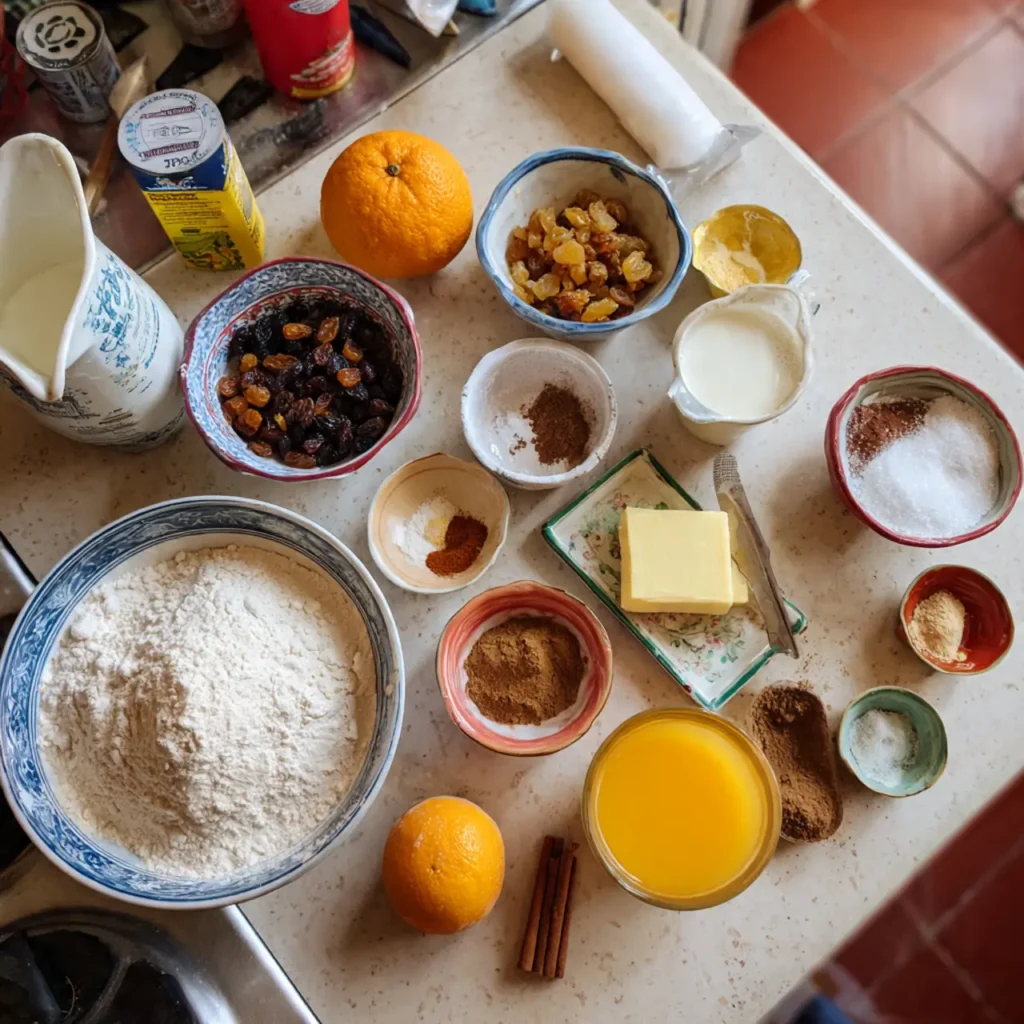
Okay, shopping list time. Nothing too fancy, I promise.
(And yes, you can sub things. I do it all the time.)
- 3 cups (about 380 g) all-purpose flour
- 1 packet (7 g) active dry yeast
- 1/3 cup (70 g) granulated sugar
- 1/2 teaspoon salt
- 1 teaspoon ground cinnamon
- 1/4 teaspoon ground nutmeg (optional, but so good)
- 1 cup (240 ml) warm milk (not hot, think warm bath)
- 1/4 cup (60 g) unsalted butter, melted and slightly cooled
- 1 large egg, room temp if possible
- 1 teaspoon vanilla extract
Dried fruit part (the star of the show):
- 1 cup mixed dried fruit, chopped if large
- think raisins, sultanas, dried cranberries, chopped dried apricots, whatever you have
- 1/3 cup (80 ml) orange juice (or water, or a mix with a splash of rum) for soaking
- Zest of 1 orange (if you have it, don’t stress if you don’t)
Optional but awesome:
- 1/3 cup chopped nuts (walnuts, almonds, pecans)
- 1 tablespoon softened butter for brushing the top after baking
- Powdered sugar for dusting
- A handful of extra dried fruit on top just for looks (if you’re feeling fancy)
Ingredient chaos notes:
- If you only have instant yeast, use the same amount; you can mix it straight into the flour.
- I once used half whole-wheat flour. Bread was denser but still tasty. Just don’t go 100% whole wheat unless you like “sturdy” bread.
- Don’t buy pre-chopped “fruit cake mix” if it looks sad and neon. Just don’t. It tastes weird and fake.
How to Make Traditional Christmas Bread with Dried Fruit :
1. Soak the fruit (don’t skip this)
The key is—oh wait, I forgot to mention—you need to start with the fruit.
- Add your mixed dried fruit to a small bowl.
- Pour the orange juice (or juice + rum) over the fruit.
- Let it sit for at least 20–30 minutes while you make the dough. Stir a couple of times.
If you remember earlier, let it soak longer. If you forget and only soak it 10 minutes, it’s fine, just… not as perfect.
2. Activate the yeast
- Warm the milk until it’s just warm, not hot. If it’s too hot, you’ll kill the yeast. (Been there.)
- In a small bowl, mix warm milk with 1 tablespoon of the sugar and the yeast.
- Let it sit for about 5–10 minutes until it’s foamy. If nothing happens, your yeast might be dead. Try again with a fresh packet.
And yes, the few times I tried to rush this, the bread didn’t rise properly and I got grumpy.
3. Make the dough
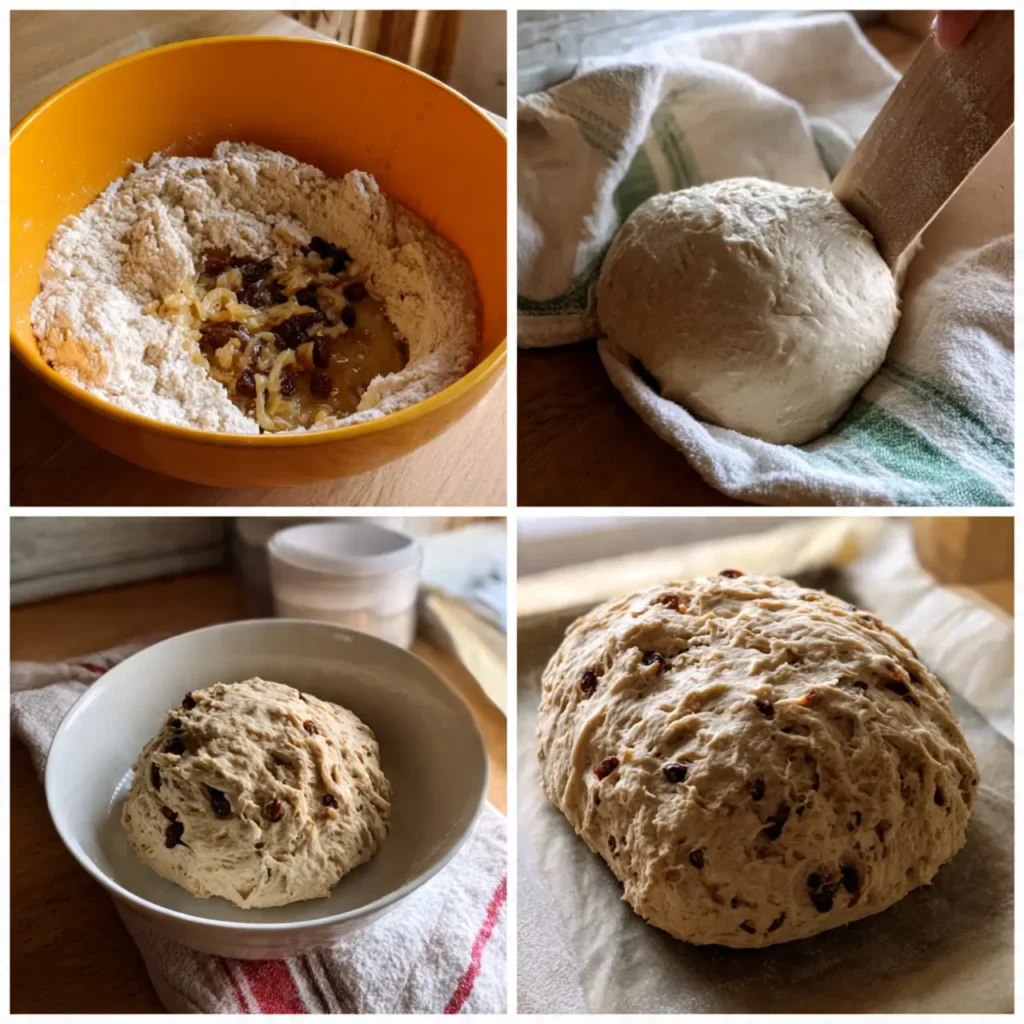
- In a big bowl, combine flour, remaining sugar, salt, cinnamon, and nutmeg.
- In another bowl (or just use the yeast bowl if it’s big enough), whisk together the egg, melted butter, and vanilla.
- Pour the wet mixture into the dry ingredients along with the foamy yeast mixture.
Now mix. You can:
- Use a wooden spoon
- Or your hands (messy but kinda fun)
It’ll look shaggy and sticky at first. That’s normal. If it’s super dry and won’t come together, add a tiny splash of milk. If it’s a sticky mess, sprinkle in a little more flour, but don’t go crazy.
4. Add the fruit
Drain any extra liquid from the soaked fruit (you don’t want it dripping wet). Pat it a bit with paper towel if it’s really wet.
- Add the soaked fruit, orange zest, and nuts (if using) to the dough.
- Gently knead it in. Some fruit will try to escape. Push it back in.
It’ll look a little lumpy and uneven. Kinda weird. That’s fine.
Knead for about 5–7 minutes on a lightly floured surface until the dough feels smoother and elastic. It shouldn’t stick horribly to your hands, but it also shouldn’t be stiff.
5. First rise
- Put the dough into a lightly oiled bowl.
- Cover with a clean towel or plastic wrap.
- Let it rise in a warm, draft-free spot for about 1–1.5 hours, until doubled.
If your kitchen is cold, it’ll take longer. Sometimes I turn the oven on for a minute, then turn it off and stick the bowl in there (with the oven off) to help it rise.
Speaking of ovens—have you ever opened your oven, totally forgetting you left dough in there “just for a moment”? Because I have. More than once.
6. Shape the loaf
Once the dough has doubled:
- Gently punch it down (this part is oddly satisfying).
- Turn it out onto a lightly floured surface.
- Shape it into:
- A round loaf
- Or a log to go into a loaf pan
I usually go with a round loaf and place it on a parchment-lined baking tray. Looks super homey.
Cover again and let it rise another 30–45 minutes, until puffy.
7. Bake
Oh, and another thing: preheat your oven before you forget.
- Preheat to 350°F / 180°C.
When the loaf looks puffed:
- You can lightly brush the top with milk for a softer crust.
- Bake for about 30–40 minutes.
It should be golden brown and sound hollow when you tap the bottom. If you’re using a thermometer, the inside should be around 190°F / 88°C.
If the top browns too fast, just tent it with foil and keep going.
If you burn the bottom (it happens), let it cool and gently scrape off the worst with a knife. It’s not ruined. Just “rustic.”
8. Finish it off
While it’s still warm:
- Brush the top with a little softened butter.
- Let it cool at least 20–30 minutes before slicing.
You can slice it hot, but it might squish a bit. I usually fail at waiting and cut into it early anyway.
Dust with powdered sugar if you want it to look festive. Or don’t. It’s your bread.
How to Serve This Christmas Bread :
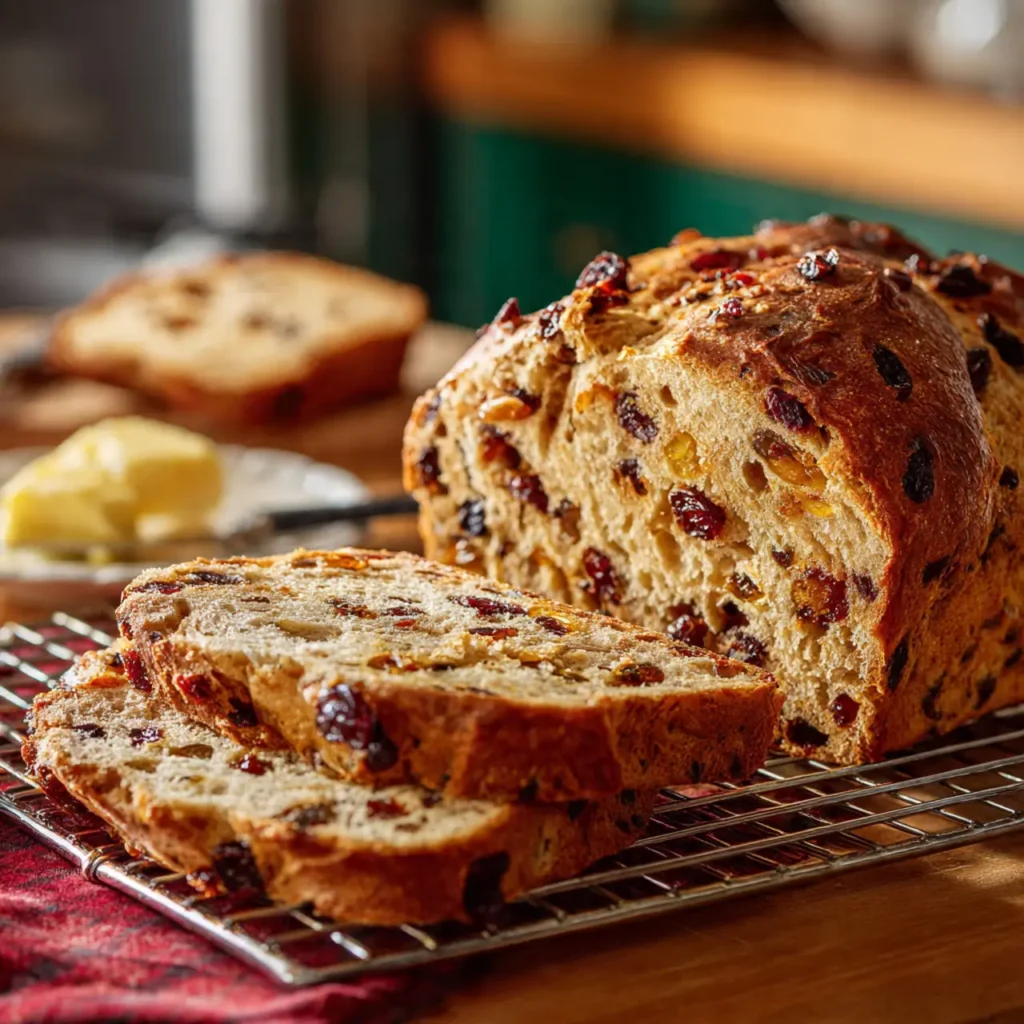
Actually, you know what? This bread kind of works for everything:
- Warm with a thick smear of butter
- Toasted the next day with jam
- Turn leftovers into French toast (HIGHLY recommend)
- Or just tear off chunks while standing in the kitchen in your socks. No judgment.
My neighbor Sarah swears it tastes better the second day. I don’t always have the self-control to test that theory properly.
Real-Life Tips and Little “Don’t Do What I Did” Moments :
- Don’t skip soaking the fruit. This drove me crazy until I figured out that was why my bread was turning out dry.
- If the dough feels too stiff, add a bit more milk. Dry dough = dry bread.
- Don’t add extra flour just because it’s a bit sticky at first. Give it time.
- Use real butter. I don’t care what anyone says, it just tastes better here.
- If you want a stronger holiday vibe, add a pinch of cloves or cardamom. Just a pinch, they’re strong.
Is it just me or does everyone overbake bread “just to be safe”? Pull it out as soon as it’s cooked through—overbaking is how you end up with Version 1.0: cardboard loaf.
When my family finally tried the successful version, I was so proud. Honestly got a little teary-eyed when my mom said, “This tastes like Christmas morning.”
It’s not fancy bakery-level, but it’s cozy and real and that’s what matters to me.
So yeah. If I can make this without burning down my kitchen (and with my neighbor knocking in the middle of the first rise to borrow sugar), you can absolutely make it too.
Let me know how yours turns out, seriously. And if you find a weird but good dried fruit combo, tell me, because I’m curious.
Now I’m craving this again. Thanks a lot, brain. 🙂
Traditional Christmas Bread with Dried Fruit – Soft, Sweet & Perfect for Holidays
This traditional Christmas bread with dried fruit is a soft, lightly sweet holiday loaf packed with soaked raisins, apricots, warm spices, and orange zest. Cozy, tender, and perfect for Christmas morning breakfast or an afternoon coffee break.
Ingredients
- 3 cups (about 380 g) all-purpose flour
- 1 packet (7 g) active dry yeast
- 1/3 cup (70 g) granulated sugar
- 1/2 teaspoon salt
- 1 teaspoon ground cinnamon
- 1/4 teaspoon ground nutmeg (optional)
- 1 cup (240 ml) warm milk
- 1/4 cup (60 g) unsalted butter, melted and slightly cooled
- 1 large egg
- 1 teaspoon vanilla extract
- 1 cup mixed dried fruit (such as raisins, sultanas, dried cranberries, chopped dried apricots)
- 1/3 cup (80 ml) orange juice (or orange juice with a splash of rum) for soaking the fruit
- Zest of 1 orange
- 1/3 cup chopped nuts (walnuts, almonds, or pecans, optional)
- 1 tablespoon softened butter for brushing the top after baking
- Powdered sugar for dusting (optional)
Instructions
- Step 1Add the mixed dried fruit to a small bowl and pour the orange juice (or orange juice with a splash of rum) over the fruit. Stir and let it soak for 20–30 minutes while you prepare the dough, stirring occasionally so all the fruit softens evenly.
- Step 2Warm the milk until it is pleasantly warm but not hot. In a small bowl, combine the warm milk, 1 tablespoon of the sugar, and the active dry yeast. Stir gently and let it sit for 5–10 minutes until the mixture becomes foamy on top, indicating the yeast is active.
- Step 3In a large mixing bowl, whisk together the all-purpose flour, remaining sugar, salt, ground cinnamon, and ground nutmeg (if using) until everything is evenly distributed.
- Step 4In another bowl, whisk the egg, melted and slightly cooled butter, and vanilla extract until smooth. Pour this mixture into the bowl with the foamy yeast mixture and stir to combine.
- Step 5Pour the combined wet ingredients into the bowl with the dry ingredients. Stir with a wooden spoon or spatula until a shaggy dough forms. If the dough seems extremely dry and will not come together, add a small splash of milk. If it is very sticky, sprinkle in a little more flour, adding just enough to handle it.
- Step 6Drain any excess liquid from the soaked dried fruit. Gently pat the fruit dry with paper towels if it is very wet. Add the soaked fruit, orange zest, and chopped nuts (if using) to the dough. Knead gently in the bowl or on a lightly floured surface until the fruit and nuts are evenly distributed throughout the dough.
- Step 7Transfer the dough to a lightly floured surface and knead for about 5–7 minutes until it becomes smoother and more elastic. The dough should be soft and slightly tacky but not unmanageably sticky. Add small amounts of flour as needed to keep it from sticking to your hands and the counter.
- Step 8Place the kneaded dough into a lightly oiled bowl, turning it once to coat the surface. Cover the bowl with a clean kitchen towel or plastic wrap. Let the dough rise in a warm, draft-free spot for about 1 to 1.5 hours, or until it has roughly doubled in size.
- Step 9Once the dough has doubled, gently punch it down to release the air. Turn it out onto a lightly floured surface and shape it into a round loaf or a log, depending on whether you plan to bake it freeform on a tray or in a loaf pan. Place the shaped dough onto a parchment-lined baking tray or into a greased loaf pan.
- Step 10Cover the shaped dough again with a towel or plastic wrap and let it rise for another 30–45 minutes, or until puffy and noticeably lighter. During this time, preheat the oven to 350°F (180°C).
- Step 11If desired, lightly brush the top of the risen loaf with a bit of milk for a softer, lightly browned crust. Bake in the preheated oven for about 30–40 minutes, or until the bread is golden brown and sounds hollow when tapped on the bottom. An instant-read thermometer inserted into the center should read about 190°F (88°C). If the top browns too quickly, tent it loosely with aluminum foil for the last part of baking.
- Step 12Remove the bread from the oven and transfer it to a wire rack. While it is still warm, brush the top with the softened butter. Allow the loaf to cool for at least 20–30 minutes before slicing. Dust with powdered sugar for a festive touch if desired, then slice and serve warm or at room temperature.