
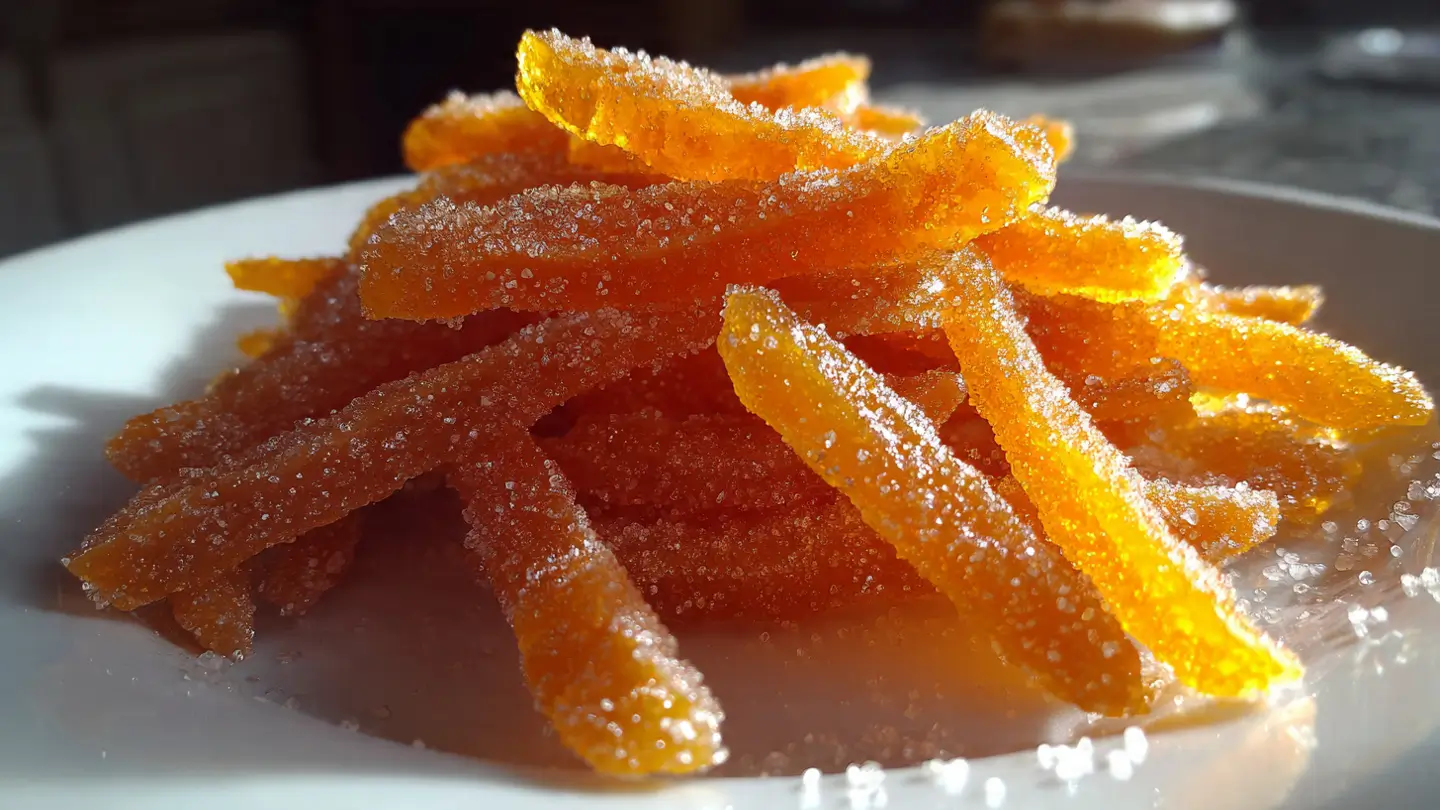
Okay, so I’ve officially burned through like four batches of orange peels before I finally got this candied orange peel recipe right. The first time I tried it, I basically made tiny orange baseball bats—chewy, bitter, and totally inedible. Not a win. But now? Now I’m the girl who shows up at parties with homemade candied orange peels in little jars like some sort of citrusy wizard. It’s kind of embarrassing, but also kinda cool.
Candied orange peel is one of those things that feels fancy and complicated, but honestly, it’s just peels, sugar, water, and a little patience. I use mine in desserts, chop them into cookies, dip half in chocolate for gifts, and yes, I even sneak a few straight from the jar when no one’s looking. (Looking at my husband, Zach, who still thinks I don’t distribute them evenly.)
Anyway, here’s my version—the one that actually works without tasting like cleaning product or turning into a weird gelatin disaster.
Table of Contents :
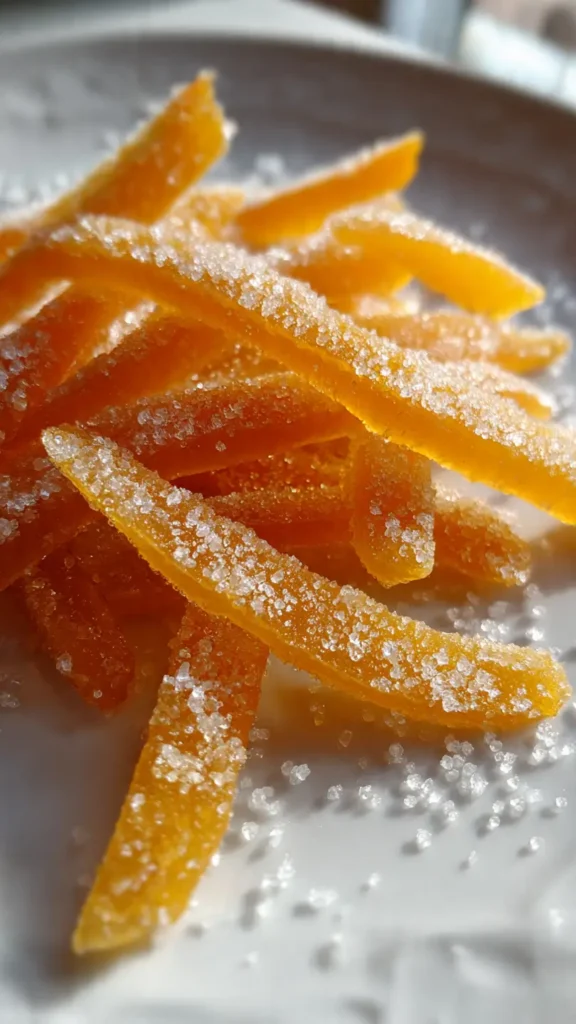
Candied Orange Peel Recipe :
So, where did this recipe come from? I think I first saw it on Pinterest, but then I tried a version from a baking blog, then my cousin’s “secret” method, and finally, after a lot of trial and error, patched together what feels right to me. I know some people skip the blanching, but I swear by it. Otherwise, the bitterness sneaks up on you like a passive-aggressive coworker.
A few things I’ve learned:
Use oranges with thick, fragrant peels (like navel or clementines), not super thin ones.
Wash them well. I mean really well. This is going in syrup, not just tossed on a salad.
If you burn the sugar syrup, it’s game over. I speak from sad, sad experience.
Candied Orange Peel Ingredients :
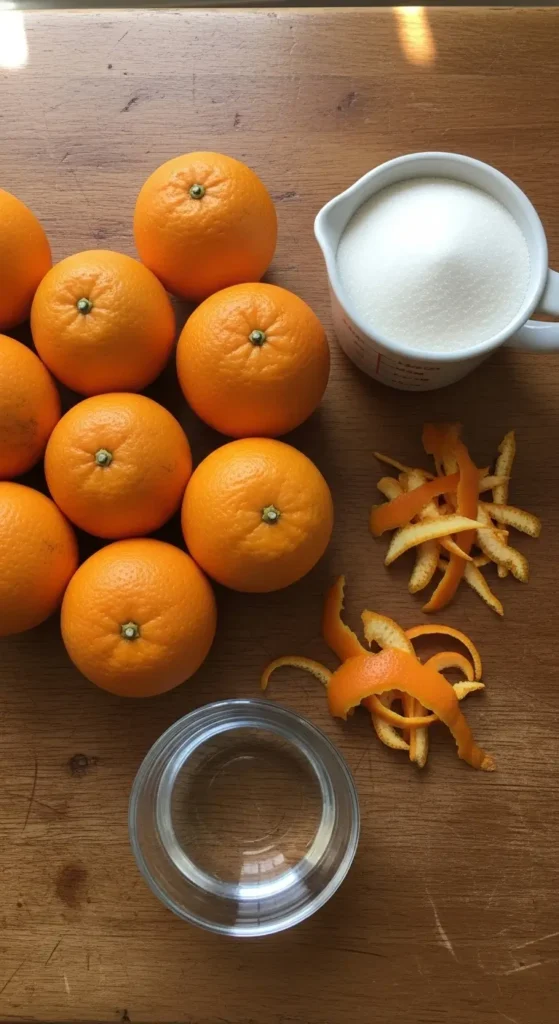
I usually make a small batch because I’m lazy and I don’t need a whole truckload of candied peel sitting around (temptation level: too high). These candied orange peels are best stored in a jar and used over a few weeks.
3–4 large oranges (I usually go for the cheapies from the market, but I pick ones that feel heavy and smell like orange)
1 ½ cups sugar (I use regular white, nothing fancy. I’ve tried demerara, and it’s nice, but it’s not worth it for peels)
1 cup water
A tiny splash of lemon juice (optional, I usually add a squeeze just to keep the syrup from crystallizing, but I don’t always measure it)
Extra sugar for rolling (about ½ cup, just regular granulated)
Side notes:
Don’t bother with organic if you’re stripping the peel and blanching anyway.
Save the naked oranges for juice, smoothies, or just eating. I sliced mine and gave them to my daughter, who demanded I make “orange candy” for her school snack bag.
I wouldn’t bother with pre-peeled citrus. It’s weird and expensive.
Candied Orange Peel Instructions :
- Peel the oranges, kind of.
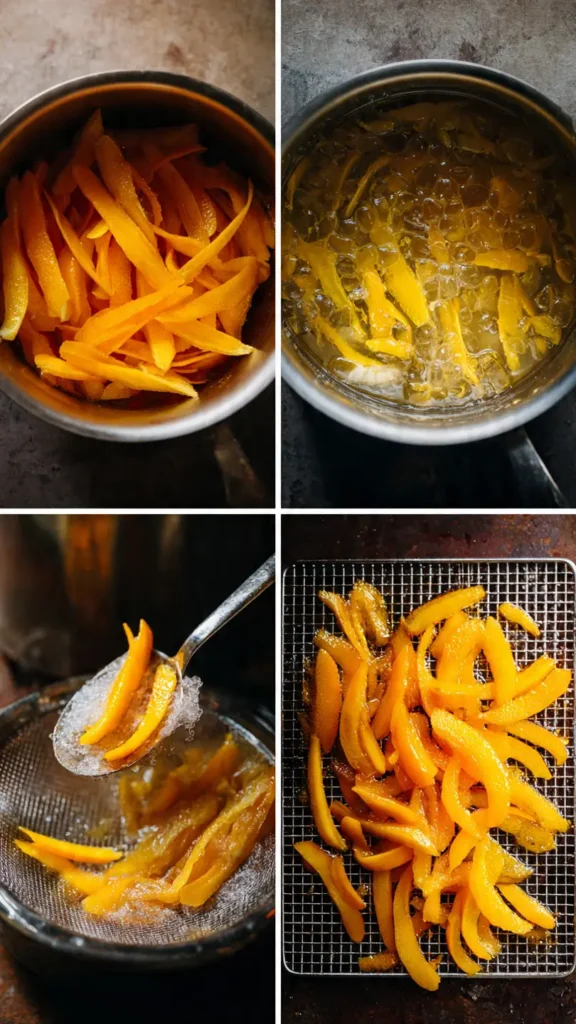
Cut the top and bottom off each orange so it can stand flat. Then, with a sharp knife, slice vertically down the sides, just through the peel and the white pith, leaving the fruit inside. Pull off the peel in big chunks, then slice into strips about ¼ inch wide. If the pith is super thick, I sometimes use a spoon to scrape a bit off the back so it’s not a giant white lump, but I don’t go overboard.
(Look, I know some people swear by peeling the pith completely, but I’m lazy, and as long as I blanch well, it’s fine.)
- Blanch the bitterness right out.
Put the peel strips in a small saucepan and cover with water. Bring to a boil, then simmer for 10 minutes. Drain, rinse with cold water, then repeat with fresh water for another 10 minutes. Do this 2–3 times. I usually taste a piece after the second round—if it’s still really bitter, I do a third.
If you skip this step, the peels will taste like cough syrup. I learned this the hard way and had to throw away a whole batch.
Let the peels cool in a colander while you make the syrup.
- Make the syrup (and pray you don’t burn it).
In the same pot, combine the sugar and water. Heat over medium, stirring until the sugar dissolves completely. Don’t walk away. I once burned the bottom because I was texting my sister about her dog’s ear infection. Disaster.
Once the sugar is fully dissolved, let it simmer (no need to boil hard). Gently add the drained orange peels.
- Slow cook into candied heaven.
Bring it back to a gentle simmer and cook for about 45–60 minutes, stirring occasionally. The peels are done when they’re soft, slightly translucent, and the syrup is thick enough to coat the back of a spoon.
It’ll look kinda weird at first—wrinkled, bumpy, and generally unappetizing. That’s normal. They’re becoming candy.
Remove from heat and let them sit in the syrup for at least 30 minutes, or even overnight if you’re like me and forget about them. (I’ll be honest, I’ve left them in there for 12 hours and it’s fine. Better, even.)
- Rolling in sugar (the fun part).
Lift the peels out with a slotted spoon and let excess syrup drip off. Shake gently over the pot so you don’t waste it. I save the leftover syrup in a jar and use it in cocktails, tea, and simple baking situations. (It’s basically orange simple syrup—gold mine.)
Toss the peels in a bowl of extra sugar until they’re nicely coated. If you’re making a lot, I’ve also just thrown them in a zip-top bag with sugar and shaken it like a snow globe. Works great.
Lay them out in a single layer on a wire rack (or parchment paper) and let them air-dry for a few hours, or in a very low oven (around 170°F / 80°C) for 20–30 minutes if you’re in a hurry.
- Store them like you mean it.
Once dry, transfer to an airtight container. Keep them in a cool, dark place. They’ll last 2–3 weeks, sometimes longer if your kitchen is cool and dry. I’ve left a jar in the fridge for over a month with no issues.
How I Actually Use These Candied Orange Peels :
Here’s the real talk, not the “perfect recipe card” version:
In desserts: I toss chopped candied orange peel into pound cake, quick breads, and fruit tarts. It’s also amazing in a chocolate cake or brownies.
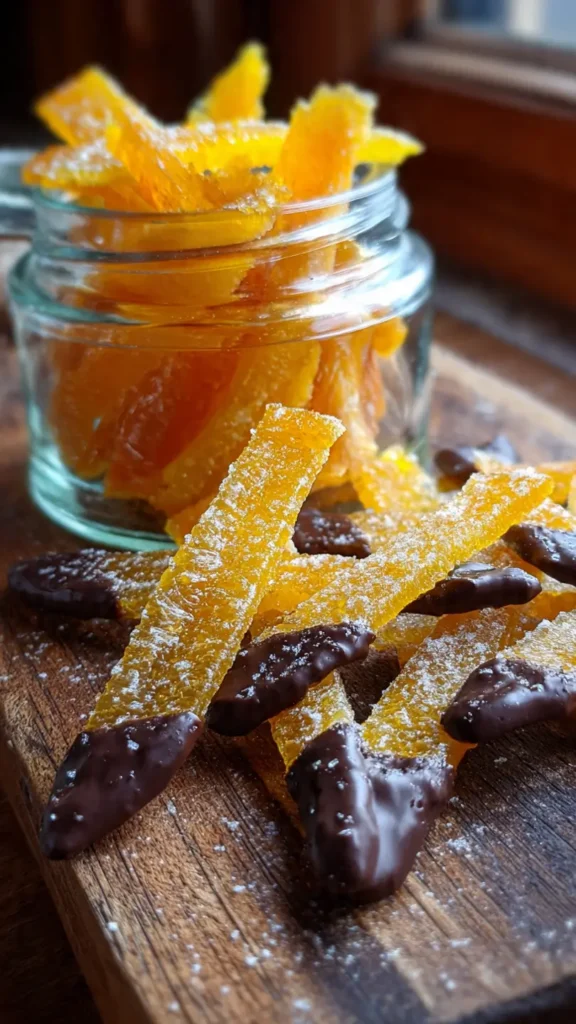
Dipped in chocolate: I roll half of the batch in dark chocolate and stick them in a small tin for gifts. My husband’s coworkers think I’m some kind of baking genius. I’m not. I’m just organized.
Cocktails: I’ve used candied orange peel for garnish in Old Fashioneds, negronis, and even in a bourbon sour. It’s fancy as hell and looks like you tried.
Snacking: I’m not gonna lie, I eat them like tiny sweet, chewy candies. My daughter once stole a whole bag and fed them to the dog. (Spoiler: the dog was fine, but I wept a little.)
Random tips I’ve picked up:
If the syrup crystallizes on the pot, don’t panic. It’s sugar. Clean it while warm with hot water.
A wire rack is better than a plate for drying. They stick less and dry more evenly.
If they’re still too sticky, let them sit uncovered on the counter for a few more hours.
People keep asking me for this recipe, so I guess it’s actually good now. If I can make candied orange peels without turning the kitchen into a sugar disaster zone, anyone can.
Let me know if you try it—I’m obsessed with hearing how people actually make it their own.
Happy cooking 🍊✨ (and may your sugar syrup never darken and smoke like mine did last winter).
Candied Orange Peel
Easy candied orange peel recipe with step-by-step instructions. Make candied orange peels for desserts, chocolate, cocktails, and garnish. Sweet, chewy, and totally doable at home.
Ingredients
- 3–4 large oranges
- 1 ½ cups granulated sugar
- 1 cup water
- Splash of lemon juice (optional)
- Extra granulated sugar for rolling
Instructions
- Step 1Cut the top and bottom off each orange. Make lengthwise cuts just through the peel and pith, then peel off the skin. Cut into ¼-inch wide strips. If the pith is very thick, scrape off some of the white part with a spoon.
- Step 2Place the peel strips in a saucepan and cover with water. Bring to a boil, then simmer for 10 minutes. Drain, rinse with cold water, and repeat with fresh water 2–3 times to reduce bitterness. Taste a piece after blanching; do one more round if it’s still very bitter. Let cool slightly in a colander.
- Step 3In the same pot, combine 1 ½ cups sugar and 1 cup water. Heat over medium, stirring until the sugar dissolves completely. Do not walk away or let it burn. Let the syrup come to a gentle simmer.
- Step 4Add the blanched peels to the syrup. Bring back to a gentle simmer and cook for 45–60 minutes, stirring occasionally, until the peels are soft, slightly translucent, and the syrup is thick enough to coat the back of a spoon. Remove from heat and let sit in the syrup for at least 30 minutes (or up to 12 hours).
- Step 5Lift peels out with a slotted spoon, letting excess syrup drip off. Toss in a bowl of extra granulated sugar until lightly coated. If making a big batch, transfer to a zip-top bag with sugar and shake gently.
- Step 6Lay the sugared peels in a single layer on a wire rack (or parchment paper). Let air-dry for several hours, or place in a very low oven (around 170°F / 80°C) for 20–30 minutes if in a hurry. Store in an airtight container at room temperature for 2–3 weeks; refrigerate for longer storage.